REFOOTURE Project • Workstream 3
RIFS Positive Innovations
Co-creating practical innovations with Community Interest Groups (CIGs) to address local food system challenges and create lasting impact
Co-creating practical innovations with Community Interest Groups (CIGs) to address local food system challenges and create lasting impact
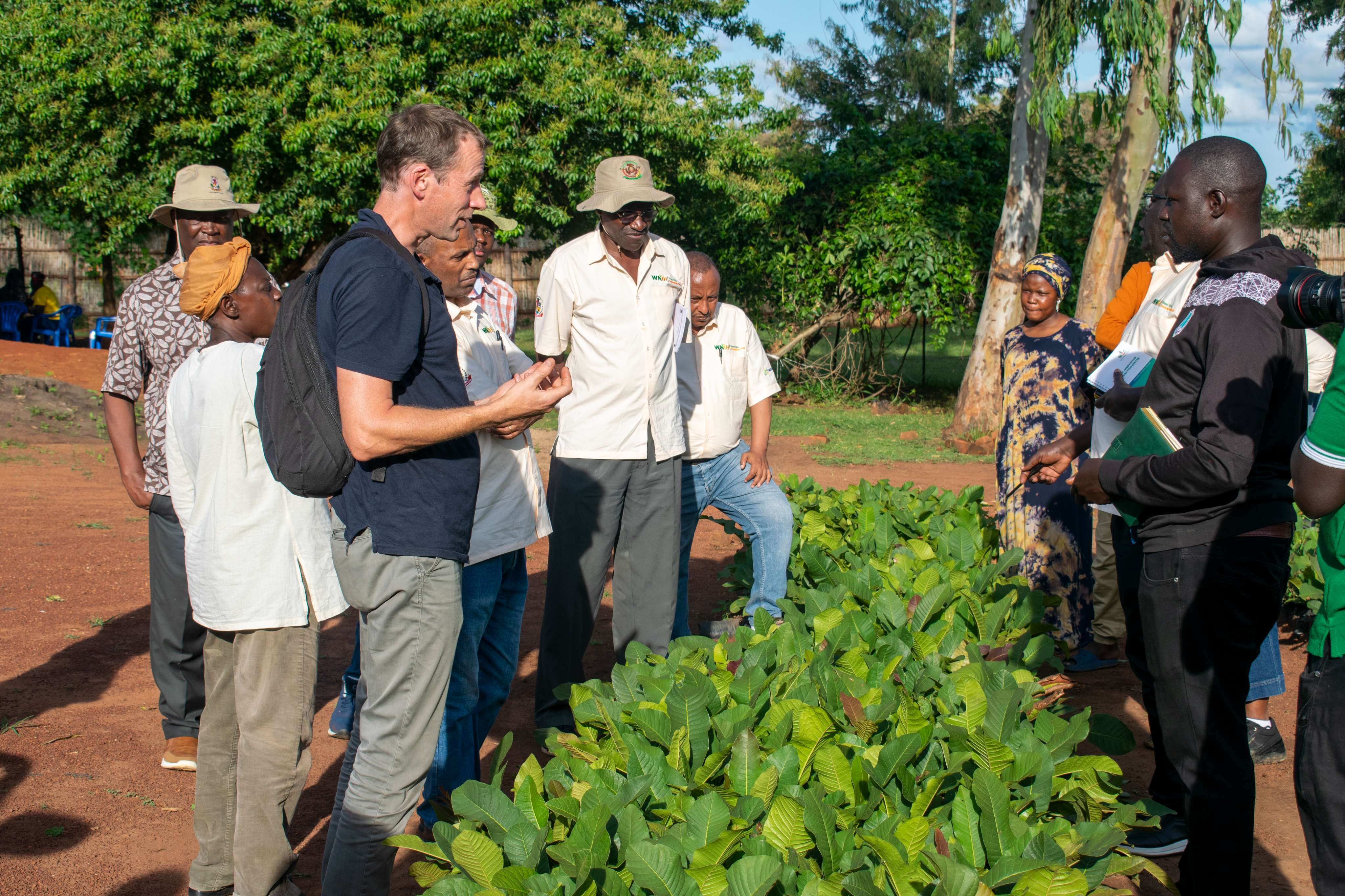
Innovation is at the heart of food system transformation. This workstream focuses on co-creating and testing positive innovations with Community Interest Groups (CIGs)—local groups of farmers, entrepreneurs, and community members who are actively engaged in improving their food systems.
Rather than imposing external solutions, we work alongside communities to identify challenges, brainstorm locally-appropriate innovations, and test them in real-world conditions. Successful innovations are documented and shared for scaling across the region.
Testing intercropping, mulching, cover cropping, and organic pest management
Low-cost storage, solar drying, and value addition techniques
Mobile apps for market information, weather alerts, and extension advice
Waste-to-resource innovations including composting and biogas
Rainwater harvesting, drip irrigation, and water-efficient farming
Innovative models connecting smallholders to markets and value chains
Community Interest Groups are the backbone of this workstream. Each CIG consists of 15-30 community members who share a common interest in improving a specific aspect of their food system. WNIH provides facilitation, technical support, and seed funding for innovation experiments.
Identifying and mobilizing community members around shared food system interests
Participatory assessment of priority challenges and opportunities
Brainstorming and selecting promising innovations to test
Implementing and monitoring innovation experiments with technical support
Assessing results and deciding whether to adapt, adopt, or abandon
Documenting and disseminating successful innovations for wider uptake
Connect with us to explore how we can support community-driven innovation
Get In Touch All Workstreams