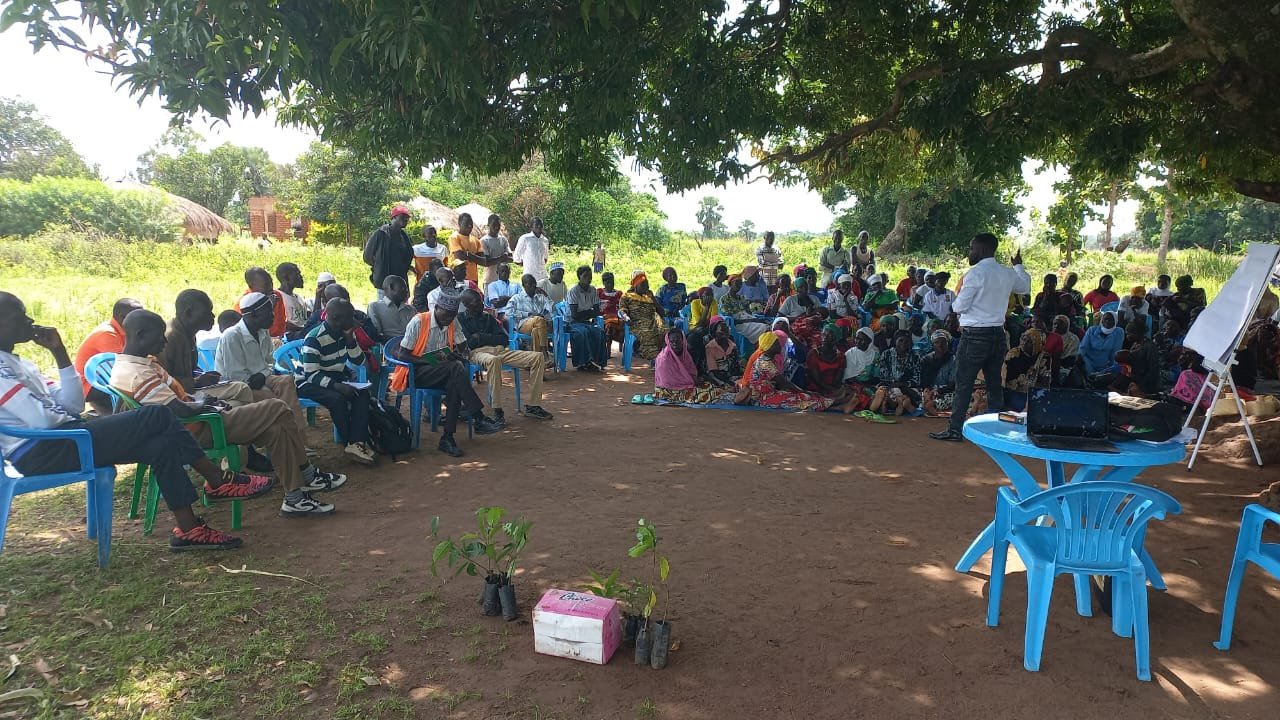
The journey of innovation in Arilo continues to gather momentum. Following the official launch of the Innovation Challenge for Regenerative and Inclusive Food Systems, the West Nile Innovation Hub (WNIH) together with Muni University took the message deeper into the community through a series of info sessions held across three locations: Joke Parish, Topland Agricultural Institute in Arunga, and Tuliki.
The sessions, which drew a combined attendance of 62 participants, were designed to spread the word, answer questions, and equip potential innovators with the knowledge they need to develop powerful solutions rooted in local realities.
Building on a Foundation of Possibility
Opening remarks at the sessions traced the inspiring journey that has brought Arilo to this moment. It all began with small sparks of possibility. Common Interest Groups, or CIGs, were formed, bringing together voices that had long been waiting to be heard. Through innovator mapping, hidden talents emerged local dreamers, problem solvers, and creators who carried within them the seeds of change. Ecosystem mapping then revealed the rich tapestry of connections and resources that already existed, showing that the community itself was a living network of potential.
Then came the hackathon, a gathering of minds and hearts where ideas flowed freely. Rooted in the realities of rural life yet reaching toward bold new horizons, solutions were born that spoke not only to immediate needs but to the promise of a brighter future for Arilo.
Why This Innovation Challenge Matters
The info sessions made it clear that this challenge is not just another project. Drawing from examples like the Parish Development Model requirements that demand specific thematic alignment, participants learned that innovation must be intentional. Out of 20 ideas generated in earlier activities, eight were refined, and four have emerged as strong candidates. The goal now is to cast the net wider across all of Arilo.
The six innovation themes were presented and discussed in detail:
Post-harvest losses and market access: How can farmers preserve what they grow and reach buyers beyond their immediate community?
Access to inputs and extension services: What creative solutions can connect farmers to the tools and knowledge they need?
Water stress (drought and flooding): Wells and springs have dried up over time. How can the community restore and protect its water sources?
Nutrition challenges: What innovations can ensure children and families have access to nutritious food?
Deforestation and land degradation: Tree cutting and poor tilling practices like bush burning are harming the land. What alternatives exist?
Livestock and resilience: How can farmers build systems that withstand disease, drought, and conflict?
A powerful message resonated with participants: the solutions developed here should not just serve Arilo. They should be strong enough to reach markets beyond, even as far as Kampala. The challenge is about thinking bigger while staying rooted in local wisdom.
A Call to Action
The energy in the rooms shifted from learning to action. A passionate community member stood and encouraged colleagues to seize this opportunity, reminding them that this was not a time to sit back. Questions flowed freely.
Participants raised concerns about how teams might operate practically. An example was discussed: if 500 chicks were given to a group, how would distribution among members work fairly? This sparked conversations about trust, shared responsibility, and clear group agreements.
Farmers also voiced persistent challenges with pests and diseases that have defied simple solutions, making an inquiry for support in finding lasting answers. The response was encouraging these are precisely the kinds of problems the innovation challenge aims to address by matching community problems to collective solutions.
What Comes Next
The WNIH team tasked all participants with a clear mission: go back and ideate on the themes, and disseminate what Muni University is doing through the innovation challenge to others who could not attend. The call, once known mainly to CIG members, is now open to everyone across Arilo and beyond including the parishes of Matuma, Magu, Koka, Bori, and Ajoka where mobilization will continue.
A co-creation and application support session has been scheduled where ideas will be refined and shaped into strong application forms. For those who cannot attend, support remains available through field contacts and coordinators within Yumbe, including the agricultural officer for Arilo Sub-county.
The message is simple and clear: if you have an idea that can solve a real problem, there is a path forward. The seeds planted in small CIG meetings are now growing into a movement, and the entire community is invited to be part of it.